Wild Rice is a Superfood
The increasing focus on plant-based eating, clean labels, ingredient origin, sustainable food production, and nutritional benefits, is creating demand for healthier meal options.
Among the multitude of options available wild rice checks all of the boxes. It is a wholegrain and can be used in a variety of recipes from soups and salads, to entrees and desserts.
Minnesota cultivated wild rice production systems are sustainable, as there is no damage to air, water, land, soil, or forests.
Nutritional Benefits
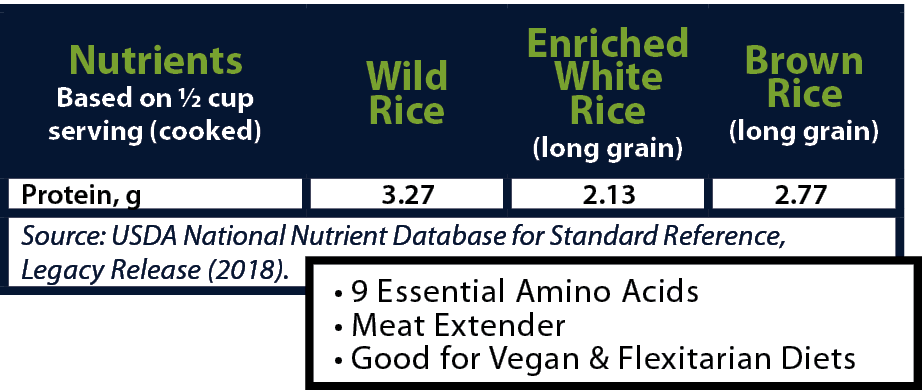
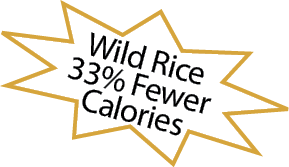
Wild rice is a wholegrain, suitable for gluten-free diets and is low in calories. It is high in dietary fiber and essential nutrients, such as phosphorus (can help strengthen bones) and magnesium (can help boost energy levels). Cooked wild rice has 33% fewer calories than brown rice and packs 18% more protein. It is also a source of potassium and zinc, and is rich in antioxidants. Wild rice can contain as much as 30 times the antioxidants of white rice, helping protect the body from disease. It also contains vitamins A and E, which are believed to enhance the body’s immune system.
|
Nutrients Based on 1/2 cup serving (cooked) |
Wild Rice |
Enriched White Rice (long grain) |
Brown Rice (long grain) |
|---|---|---|---|
| Calories | 83 | 103 | 124 |
| Protein, g | 3.27 | 2.13 | 2.77 |
| Fat, g | 0.28 | 0.22 | 0.98 |
| Dietary Fiber, g | 1.50 | 0.30 | 1.60 |
| Total Carbohydrate, g | 17.50 | 22.25 | 25.84 |
| Minerals | |||
| Phosphorus, mg | 67.00 | 34.00 | 104.00 |
| Iron, mg | 0.49 | 0.95 | 0.57 |
| Potassium, mg | 83.00 | 28.00 | 87.00 |
| Zinc, mg | 1.10 | 0.39 | 0.72 |
| Vitamins | |||
| Riboflavin, mg | 0.07 | 0.01 | 0.07 |
| Niacin, mg | 1.06 | 1.17 | 2.59 |
| Vitamin E, mg | 0.20 | 0.03 | 0.17 |
- GMO Free
- Ancient Grain
- Gluten Free
- Rich in Antioxidants
- Whole Grain
- Plant Protein
- Low in Calories
- Nutrient-Dense